
Journal of Dairy Science and Biotechnology
Korean Society of Dairy Science and Biotechnology
ARTICLE

PHASTEST 기반 Lactiplantibacillus plantarum WCFS1 prophage 지도화 및 기능분석

이광준1https://orcid.org/0009-0009-4718-412X, 송수연1,2,*https://orcid.org/0000-0003-1819-5099
Kwangjun Lee1https://orcid.org/0009-0009-4718-412X, Sooyeon Song1,2,*https://orcid.org/0000-0003-1819-5099
1전북대학교 축산학과
2전북대학교 농축산식품융합학과
1Department of Animal Science, Jeonbuk National University, Jeonju, Korea
2Department of Agricultural Convergence Technology, Jeonbuk National University, Jeonju, Korea
*Corresponding author : Sooyeon Song, Departments of Animal Science and Agricultural Convergence Technology, Jeonbuk National University, Jeonju, Korea, Tel : +82-63-270-2606, Fax : +82-63-270-2604, E-mail : songsy@jbnu.ac.kr

© Copyright 2025, Korean Society of Dairy Science and Biotechnology. This is an Open Access article distributed under the terms of the Creative Commons Attribution Non-Commercial License (http://creativecommons.org/licenses/by-nc/3.0/) which permits unrestricted non-commercial use, distribution, and reproduction in any medium, provided the original work is properly cited.

Received: Nov 09, 2025; Revised: Dec 10, 2025; Accepted: Dec 10, 2025

Published Online: Dec 31, 2025

Abstract

The aim in this study was identify prophage and cryptic prophage elements in the complete genome of Lactiplantibacillus plantarum WCFS1. phage search tool with enhanced sequence translation (PHASTEST) was used for predicting prophages, and Prokka and Bakta were used for comparative annotation. Three prophage regions were detected, two of which were classified as intact and one as incomplete based on their completeness scores. Comparative annotation showed that the intact regions contained structural and regulatory genes responsible for phage assembly and lysogenic-lytic control. The incomplete region lacked structural modules but retained the integrase and recombinase functions and genes related to exopolysaccharide biosynthesis. This incomplete-metabolism-associated cryptic prophage appears to contribute to modifying the host surface and maintaining genomic plasticity rather than lytic induction. Overall, the prophage regions identified in L. plantarum WCFS1 are not only inactive genetic remnants but also functional genomic modules that may support host genomic stability and adaptability under stress. These findings highlight the need to evaluate the prophage and cryptic prophage content when assessing the safety and stability of lactic acid bacteria starter cultures in industrial fermentation.

Keywords: Lactiplantibacillus plantarum WCFS1; prophage; cryptic prophage; phage search tool with enhanced sequence translation (PHASTEST); prokka/bakta genome annotation; starter culture stability

서 론

Cryptic prophage는 파지의 구조 유전자 결실이나 핵심 조절 유전자의 비활성화로 인해 더 이상 감염성 파지를 생성하지 못하면서, 숙주 유전체에 안정적으로 삽입되어 존재하는 파지 DNA이다[1]. 반면 prophage는 비활성화된 상태로 숙주 유전체에 존재하지만, 특정 자극하에서 유도되어 용균주기(lytic cycle)로 전환하여 새로운 파지 입자를 형성한다[1]. 비활성 상태의 cryptic prophage는 기능하지 않는 ‘genomic junk’로 간주되어 상대적으로 주목받지 못하였으나[2], 최근에는 숙주의 유전자 발현 조절, 스트레스 반응, 항생제 저항성, 바이오 필름 형성 등 다양한 생물학적 과정에 관여할 수 있음이 보고되고 있다[3]. 관련 연구는 주로 Escherichia coli에서 활발히 수행되어 왔으며[37] 현재는 cryptic prophage가 프로바이오틱스와 같은 산업적으로 유용한 균주에서도 면역 관련 유전자 발현 유도[8], 스트레스 방어 기작 유도[9], ‘superinfection’ 감염 방지[10] 등의 기능적 역할을 수행할 수 있는 가능성이 제기되고 있다.

유산균(lactic acid bacteria, LAB)은 발효식품 산업과 프로바이오틱스의 주요 균주군으로 장 미생물총 조절을 통한 장 건강 개선, 면역 조절 등의 기능성과 더불어 발효식품의 품질 개선 등 다양한 이점을 제공한다[11,12]. LAB 유전체에는 파지(bacteriophage) 기원 유전자들이 광범위하게 존재하며[3], 그중 상당수가 prophage 형태로 게놈에 통합되어 있다[13]. 실제로 발효유 제품에서 분리한 Lactobacillus rhamnosusLactobacillusdelbrueckii 균주의 전장유전체 분석(whole genome sequencing, WGS) 결과, 여러 개의 완전형 prophage가 유전체에 통합되어 있는 것이 보고되었으며[14], 895개의 Lactobacillaceae 계통 유전체를 대상으로 한 대규모 in silico 분석에서도 40% 이상의 균주가 prophage를 보유하고 있고, 이 중 61.4%는 실제로 유도 가능한(inducible) 형태로 존재하는 것으로 나타났다[15].

이처럼 LAB 유전체 내 prophage 존재는 매우 보편적인 현상으로 발효 공정에서 발생하는 환경 스트레스로 인한 LAB 유전체 내 prophage의 활성화는 균주의 생산성, 기능, 안정성에 부정적인 영향을 줄 수 있다[16]. 유도된 prophage는 숙주 세포의 용균(lysis)을 유도하여 배양액 내 세포 수를 감소시키며, 이로 인해 젖산 생산성(lactic acid productivity)이 저하되어 발효 지연과 불균일한 제품 생산의 문제가 발생하게 된다[15,16]. 따라서 prophage 존재 여부 및 유도 가능성에 대한 평가는 스타터 균주 선정 시 안정적으로 고품질의 유제품을 생산하는 데 있어 필수적이라 할 수 있다.

한편, 비활성화된 상태의 cryptic prophage는 감염성 입자를 생성하지 않지만, 숙주 유전체 내에 안정적으로 잔존하면서 유전적 재조합과 수평 유전자 이동이 일어나는 유전체적 변이의 중심으로 기능한다는 것이 보고되었다[17,18]. 또한 cryptic prophage가 항생제 내성, 산화·삼투·산성 스트레스 내성과 관련된 유전자를 포함하여, 숙주의 생존과 적응을 매개하는 역할도 수행하는 것으로 보고되었다[17]. 따라서 식품 산업에서 프로바이오틱스 또는 스타터로 사용할 균주를 선택할 때, prophage 및 cryptic prophage 보유 여부가 품질과 식품 안정성 확보를 위한 주요 고려 요소가 될 수 있다.

그럼에도 불구하고 LAB에서 cryptic prophage의 구조적 특성과 기능에 대한 연구는 현재까지도 제한적으로 수행되고 있다. 지금까지의 파지에 대한 연구는 주로 완전한 기능의 prophage 또는 유도 가능한 파지에 초점을 맞춰 왔고, cryptic prophage의 경우는 대부분 분석 대상에서 배제되거나 낮은 비중으로 다뤄졌다[19]. 특히 LAB에서는 유전체 안정성과 숙주의 안전성이 중요함에도, prophage와 cryptic prophage가 숙주에게 미치는 영향을 체계적으로 분석한 사례는 드물다[16].

그중 우리가 주목한 LAB은 Lactiplantibacillus plantarum로 높은 유전체 다양성과 우수한 생존력을 가져 다양한 환경에 적응할 수 있는 대표적인 종이다. 이 중 WCFS1 균주는 2003년에 수행된 Ventura의 연구에서 유전체 내에 4개의 prophage-like 요소를 보유하고 있다고 보고하였다[20]. 해당 연구에서는 ORF(open reading frame) 수준의 비교유전체학(comparative genomics) 접근법을 기반으로, 유전체 내 개별 유전자를 BLAST(basic local alignment search tool) 및 PSI-BLAST(position-specific iterated BLAST)를 통해 분석하여 phage hallmark 유전자의 존재를 확인하였다. 또한 tRNA(Trp, Asn, Ile, Leu, Met, Gly) 서열 및 att(adenine-thymine-thymine) 반복서열 탐색을 통해 prophage의 통합 부위를 추정하였으며, PCR(polymerase chain reaction) bridging을 이용한 삽입 경계 검증과 Northern blot 분석을 통해 전사 활성 여부를 확인함으로써 prophage의 기능적 상태를 평가하였다.

본 연구에서는 WGS이 완료된 L. plantarum WCFS1 균주의 유전체를 대상으로 세 가지 파지 관련 유전자 예측 도구 PHASTEST(phage search tool with enhanced sequence translation)를 활용하여, prophage 존재 여부, 구조 및 기능 유전자의 보존·결손 여부를 종합 평가함으로써 prophage 및 cryptic prophage 요소의 분포와 그로 인한 구조적 특징 그리고 유전자 기능적 특성을 분석하였다. 이는 향후 L. plantarum WCFS1 균주 외에도 LAB의 유전체를 기반으로 한 특성 평가 및 식품 안정성 확보를 위한 새로운 유전적 고려 기준을 제공할 수 있을 것이라 기대한다.

재료 및 방법

1. 균주 유전체 정보(bacterial genome information)

L.plantarum WCFS1의 완전 유전체 서열(GenBank accession no. AL935263.2)은 미국 국립생물공학정보센터(NCBI) database에서 제공받았다. 이후 prophage 예측 및 기능 분석을 위해 FASTA(.fna)와 GenBank(.gbk) 형식 파일을 사용하였다.

2. Prophage 예측 및 유전체 기능 분석(prophage prediction and genome annotation)

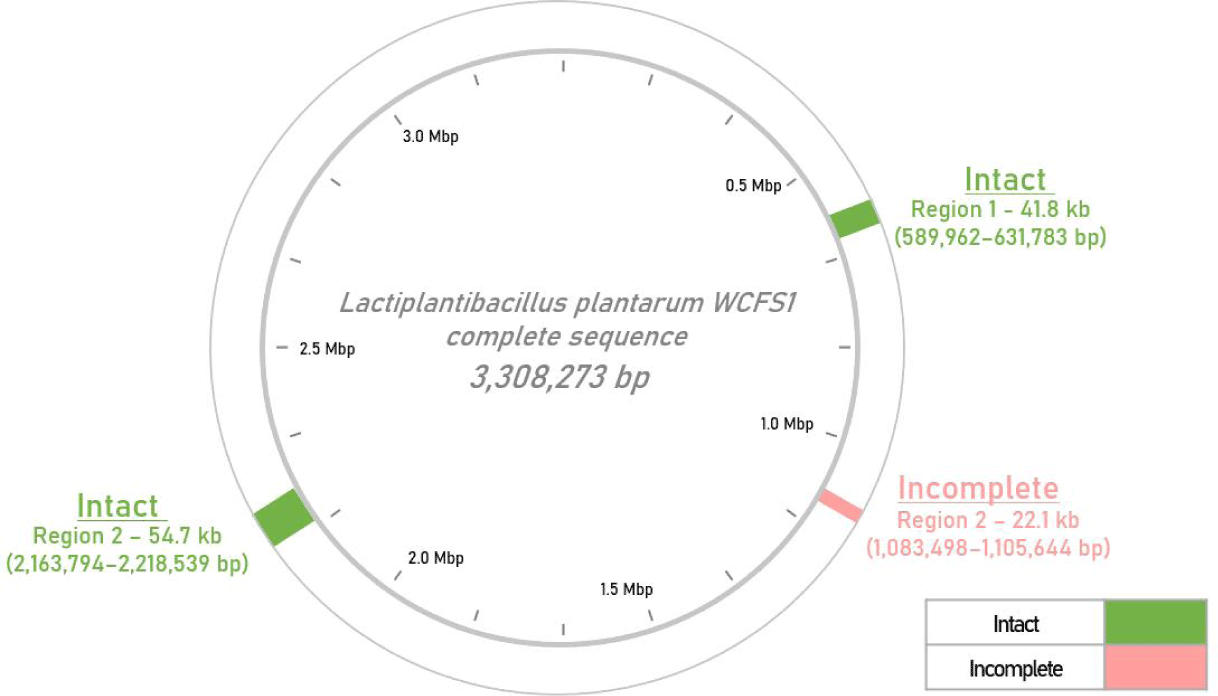
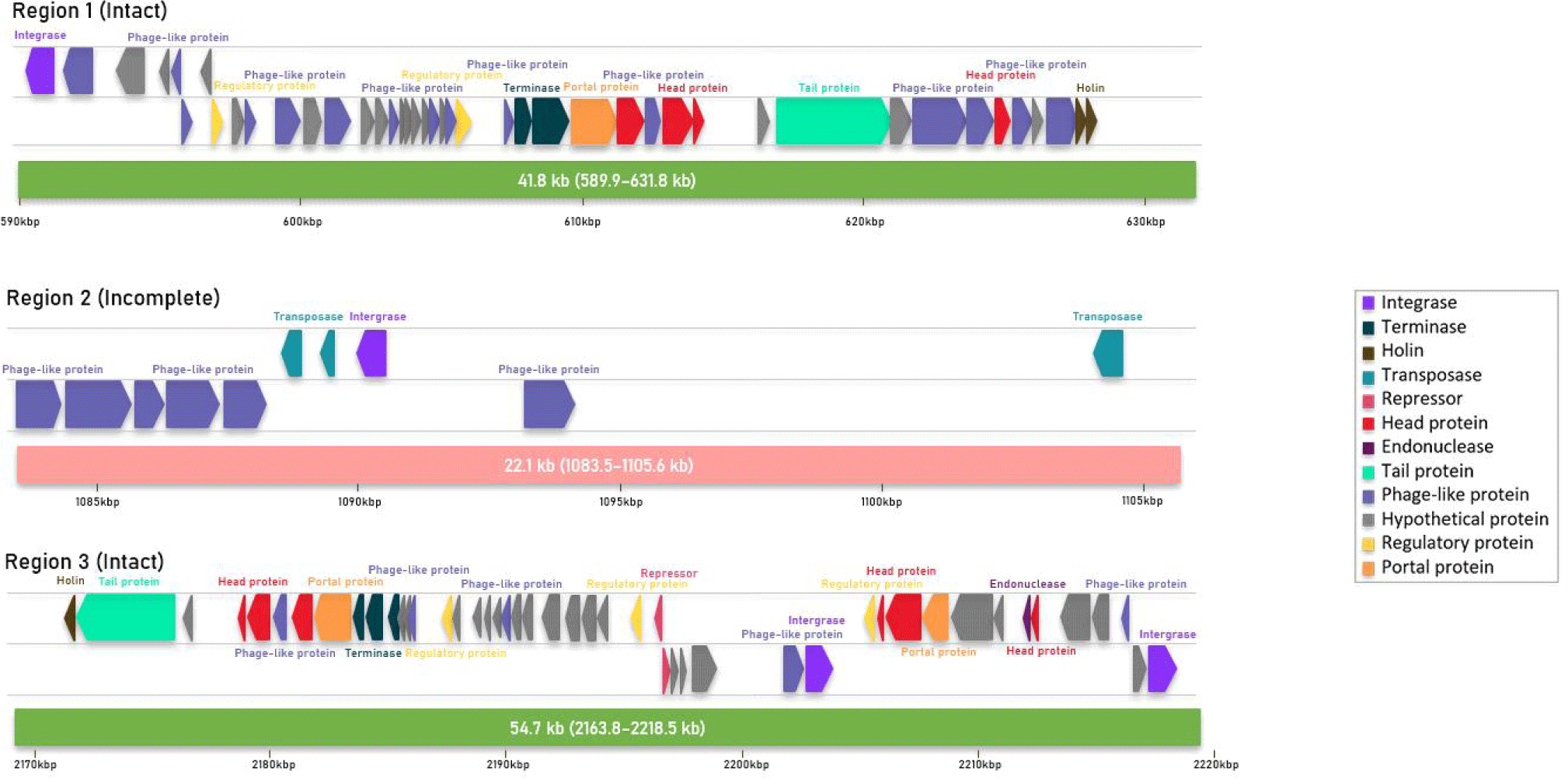
유전체 내 prophage 영역 예측은 PHASTEST 3.0을 이용하여 수행하였다[21]. 분석 prophage로 예측된 후보 영역은 완전성 점수(0–150)에 따라 “Intact(>90)”, “Questionable(70≤score≤90)”, or “Incomplete(<70)”로 분류하였으며 PHASTEST로 예측된 prophage 영역의 위치와 구조는 원형 및 선형 유전체 지도상에 도식화하였다(Figs. 1 and 2). 예측된 영역 내 유전자 기능 분석은 Prokka 1.14.6[22]와 Bakta v1.8.2[23]를 사용하여 수행되었으며, 프로그램 내장 데이터베이스를 통해 prophage 영역 내 예측 ORF의 유전자명, 단백질 기능을 확인하였으며 기능적 분류를 진행하였다.
jmsb-43-4-253-g1
Fig. 1. Prediction of prophage regions in the Lactiplantibacillus plantarum WCFS1 genome using PHASTEST. Circular genome map of L. plantarum WCFS1 (3,308,273 bp) generated by PHASTEST analysis. Three prophage candidate regions were identified and are indicated by their genomic positions. Intact prophages are highlighted in green, whereas incomplete prophages are shown in pink. PHASTEST, phage search tool with enhanced sequence translation.
Download Original Figure
jmsb-43-4-253-g2
Fig. 2. Linear genome map of prophage regions predicted by PHASTEST in Lactiplantibacillus plantarum WCFS1. The linear genome map was constructed with three prophage regions (Region 1–3) predicted by PHASTEST within the complete genome of L. plantarum WCFS1. Color-coded according to functional gene categories in the table. PHASTEST, phage search tool with enhanced sequence translation.
Download Original Figure

결과 및 고찰

1. PHASTEST(phage search tool with enhanced sequence translation)를 통한 prophage 영역 예측

L.plantarum WCFS1의 유전체를 PHASTEST를 이용하여 분석한 결과, 총 3개의 prophage 영역이 예측되었다(Fig. 1). 이 중 Region 1(589,962–631,783 bp; 41.8 kb)과 Region 3(2,163,794–2,218,539 bp; 54.7 kb)은 PHASTEST에서 제공하는 completeness(score) 150점으로 intact prophage로 판정되었으며, Region 2(1,083,498–1,105,644 bp; 22.1 kb)는 50점으로 incomplete prophage로 판정되었다(Table 1). PHASTEST를 통해 예측된 각 영역 내 phage-related ORF 수는 Region 1은 61개, Region 2는 29개, Region 3는 70개로 확인되었다. 2003년에 수행된 Ventura의 연구에서는 L. plantarum에서 총 네 개의 파지 관련 영역(Lp1–Lp4)을 보고하였으며, 해당 영역에서 degraded remnant인 R-Lp4 영역을 제외하고 PHASTEST 분석 결과와 일부 중복되었다[20]. Lp1(약 589–632 kb)는 본 연구의 PHASTEST Region 1, Lp2(약 2.16–2.20 Mb)와 Lp3(약 2.21-2.22 Mb)는 PHASTEST Region 3으로 확인되었다. 한편 Region 2(incomplete prophage) 구간이 PHASTEST를 통해 새롭게 예측되었는데 당시 연구가 PCR bridging이나 Northern blot 기반 분석을 중심으로 유도 가능성(inducibility)과 구조적 완전성(completeness)을 확인하였기 때문에, 불완전한 영역인 Region 2는 검출이 불가능했을 것이라 판단된다.

Table 1. Predicted phage regions of Lactiplantibacillus plantarum WCFS1 using phage search tool with enhanced sequence translation (PHASTEST)
Region Region position (bp) Size (bp) Score GC (%) Completeness
1 589,962–631,783 41,822 150 40.49 Intact
2 1,083,489–1,105,644 22,156 50 38.28 Incomplete
3 2,163,794–2,218,539 54,746 150 40.47 Intact
Download Excel Table

PHASTEST 예측 영역에 대해 Prokka와 Bakta을 통해 유전자 기능을 예측한 결과, PHASTEST Region 1과 3에서는 capsid, tail, portal, terminase 등 파지 입자 형성에 관여하는 구조 유전자(structural genes)와, repressor(CI), Cro, integrase(xerC), antirepressor(arpU) 등 파지의 용원–용균 전환(lysogenic–lytic switch) 생활사를 조절하는 유전자(regulatory genes)가 비교적 완전하게 보존되어 있었다.

반면 Region 2에서는 capsid 및 tail 유전자를 포함한 구조 모듈(structural module)이 결여되어 있었으며, 대신 integrase/recombinase(xerC_3) 및 다수의 glycosyltransferase 계열 유전자 등 대사 및 재조합에 관여하는 유전자(metabolic and recombination-related genes)가 존재하였다(Table 2). 이는 L. plantarum WCFS1 유전체 내에 활성화 가능한 prophage 영역과 비활성화된 cryptic prophage 영역이 공존하고 있음을 시사한다. 한 예시로 발효 대두에서 분리된 L. plantarum 5-2 균주의 comparative genome analysis 연구에서도 세 개의 완전한 prophage와 하나의 불완전한 파지 영역이 발견되었고, 실제로 다양한 Lactobacillus 속 균주에서도 불완전 prophage 영역이 보존되어 있다[24]. 결과적으로 Lactobacillus 속에 불완전 prophage가 보편적으로 존재한다.

Table 2. Key genes and functional factors of the prophage regions predicted by PHASTEST (Prokka, Bakta annotation)
Region PHASTEST Prokka, Bakta Start (bp) Stop (bp) Length (size; unit: bp)
Region 1
41,822 bp
(589,962–631,783 bp)
Intact
Attatchment_site NA 589,962 589,975 14
Integrase xerC 590,128 591,330 1,203
Phage-like_protein NA 591,510 592,673 1,164
Hypothentical_protein1) 592,872 592,997 126
Hypothentical_protein1) 593,163 593,339 177
Hypothentical_protein1) 593,481 594,527 1,047
Hypothentical_protein1) 594,557 594,925 369
Hypothentical_protein1) 594,998 595,414 417
Phage-like_protein lexA, xre 595,426 595,788 363
Phage-like_protein NA 595,961 596,191 231
Hypothentical_protein Prophage P1 protein 10 596,264 596,578 315
Hypothentical_protein DNA-binding helix-turn-helix protein 596,616 596,852 237
Regulatory_protein NA 596,999 597,199 201
Hypothentical_protein1) 597,199 597,333 135
Hypothentical_protein1) 597,358 597,540 183
Hypothentical_protein HTH cro/C1-type domain-containing protein 597,601 598,155 555
Phage-like_protein DNA-binding protein 598,161 598,445 285
Hypothentical_protein1) 598,556 598,684 129
Hypothentical_protein1) 598,817 599,203 387
Phage-like_protein NA 599,200 600,087 888
Hypothentical_protein DUF3799 domain-containing protein 600,119 600,871 753
Phage-like_protein NA 600,953 601,885 933
Hypothentical_protein1) 601,882 602,169 288
Hypothentical_protein Glyco-hydro-42 domain-containing protein 602,693 603,226 531
Phage-like_protein Prophage P1 protein 24, holliday junction resolvase 603,237 603,638 402
Hypothentical_protein1) 603,635 603,865 231
Hypothentical_protein1) 603,868 603,999 132
Hypothentical_protein DUF2528 domain-containing protein 603,999 604,367 369
Hypothentical_protein1) 604,367 604,474 108
Hypothentical_protein1) 604,488 604,670 183
Phage-like_protein NA 604,663 605,010 348
Hypothentical_protein1) 605,007 605,447 441
Phage-like_protein NA 605,444 605,611 168
Regulatory_protein arpU 605,742 606,200 459
Hypothentical_protein1) 606,572 607,354 783
Phage-like_protein NA 607,427 607,606 180
Terminase NA 607,764 608,360 597
Terminase NA 608,344 609,630 1,287
Portal_protein NA 609,683 611,278 1,596
Head_protein Phage-Mu-F domain-containing protein 611,278 612,222 945
Phage-like_protein NA 612,330 612,977 648
Head_protein NA 612,991 614,061 1,071
Head_protein NA 614,076 614,441 366
Hypothentical_protein1) 614,395 614,769 375
phage tail protein
[Lactiplantibacillus plantarum]
NA 614,759 615,313 555
Hypothentical_protein DUF3168 domain-containing protein 615,314 615,700 387
phage tail protein
[Lactiplantibacillus plantarum]
NA 615,712 616,299 588
Hypothentical_protein1) 616,317 616,829 513
Hypothentical_protein SNF2 family protein 616,898 617,134 237
Tail_protein Prophage P2a protein 48 tape measure protein 617,134 621,138 4,005
Hypothentical_protein NA 621,138 621,869 732
Phage-like_protein Prophage-tail domain-containing protein 621,845 623,743 1,899
Phage-like_protein SGNH/GDSL hydrolase family protein 623,748 624,740 993
Head_protein BppU-N domain-containing protein 624,755 625,369 615
Phage-like_protein NA 625,375 626,115 741
Hypothentical_protein1) 626,116 626,436 321
Non_phage-like_protein xkdX 626,436 626,612 177
Phage-like_protein NA 626,590 627,738 1,149
Holin Bacteriophage protein 627,739 628,035 297
Holin NA 628,022 628,381 360
Attatchment_site NA 631,770 631,783 14
Region 2
22,156 bp
(1,083,498–1,105,644 bp)
Incomplete
Phage-like_protein Glucose-1-phosphate thymidylyltransferase (rfbA) 1,083,489 1,084,352 864
Phage-like_protein Cellulase domain-containing protein 1,084,375 1,085,664 1,290
Phage-like_protein dTDP-4-dehydrorhamnose 3,5-epimerase 1,085,724 1,086,305 582
Phage-like_protein dTDP-glucose 4,6-dehydratase 1,086,315 1,087,343 1,029
Phage-like_protein dTDP-4-dehydrorhamnose reductase 1,087,413 1,088,255 843
Attatchment_site NA 1,088,315 1,088,329 15
Non_phage-like_protein1) 1,088,344 1,088,469 126
Transposase NA 1,088,478 1,088,963 486
Non_phage-like_protein1) 1,089,006 1,089,233 228
Transposase NA 1,089,230 1,089,541 312
Hypothentical_protein1) 1089676 1,089,903 228
Integrase Integrase/recombinase (xerC_3) 1,089,966 1,090,553 588
Non_phage-like_protein cpsC 1,090,910 1,091,680 771
Non_phage-like_protein cpsD / ywqD_1 1,091,692 1,092,420 729
Non_phage-like_protein Tyrosine-protein phosphatase / ywqE_1 1,092,407 1,093,180 774
Phage-like_protein Epimerase / wbgU_1 1,093,198 1,094,145 948
Non_phage-like_protein Priming glycosyltransferase / wecA_1 1,094,126 1,094,803 678
Non_phage-like_protein Glycosyltransferase, family 1 (GT1) 1,094,804 1,095,898 1,095
Non_phage-like_protein Exopolysaccharide phosphotransferase cps2G 1,095,914 1,096,912 999
Non_phage-like_protein1) 1,096,950 1,098,089 1,140
Hypothentical_protein1) 1,098,096 1,099,646 1,551
Non_phage-like_protein epsF_2 1,099,786 1,100,811 1,026
Non_phage-like_protein1) 1,100,936 1,101,136 201
Attatchment_site NA 1,101,175 1,101,189 15
Attatchment_site NA 1,101,960 1,101,971 12
Hypothentical_protein1) 1,102,296 1,102,964 669
Hypothentical_protein1) 1,103,037 1,103,834 798
Transposase Integrase catalytic domain-containing protein / insK 1,104,022 1,104,639 618
Attatchment_site NA 1,105,633 1,105,644 12
Region 3
54,746 bp
(2,163,794–2,218,539 bp)
Intact
Attatchment_site NA 2,163,794 2,163,805 12
Holin2) 2,163,938 2,164,315 378
Tail_protein Prophage P2a protein 48 tape measure protein 2,171,852 2,175,925 4,074
Hypothentical_protein SNF2 family protein 2,175,925 2,176,161 237
Hypothentical_protein Phage protein 2,176,254 2,176,742 489
phage tail protein
[Lactiplantibacillus plantarum]
Phage protein 2,176,776 2,177,342 567
Hypothentical_protein DUF3168 domain-containing protein 2,177,354 2,177,740 387
phage tail protein
[Lactiplantibacillus plantarum]
Phage tail protein 2,177,742 2,178,296 555
Hypothentical_protein Prophage protein 2,178,286 2,178,660 375
Head_protein NA 2,178,614 2,178,979 366
Head_protein Phage capsid protein 2,178,994 2,180,052 1,059
Phage-like_protein DUF4355 domain-containing protein 2,180,069 2,180,716 648
Head_protein Phage-Mu-F domain-containing protein 2,180,823 2,181,767 945
Portal_protein Phage portal protein 2,181,770 2,183,422 1,653
Terminase NA 2,183,412 2,183,963 552
Terminase NA 2,184,052 2,184,711 660
Hypothentical_protein1) 2,184,741 2,184,956 216
Terminase NA 2,184,916 2,185,425 510
Hypothentical_protein1) 2,185,465 2,185,587 123
Hypothentical_protein Prophage Lp2 protein 33 2,185,623 2,185,886 264
Phage-like_protein Transposase 2,185,855 2,186,034 180
Hypothentical_protein 2,186,631 2,186,861 231
trnW / tRNA-Trp(cca)2) 2,186,914 2,186,985 72
trnN / tRNA-Asn(gtt)2) 2,187,055 2,187,127 73
Regulatory_protein arpU 2,187,249 2,187,710 462
Hypothentical_protein Phage protein 2,187,789 2,187,989 201
Hypothentical_protein1) 2,188,020 2,188,313 294
Hypothentical_protein1) 2,188,383 2,188,514 132
Hypothentical_protein Phage protein 2,188,529 2,188,840 312
Hypothentical_protein1) 2,188,913 2,189,362 450
Hypothentical_protein1) 2,189,386 2,189,535 150
Hypothentical_protein Prophage Lp2 protein 25 2,189,538 2,189,705 168
Phage-like_protein Prophage Lp2 protein 24 2,189,698 2,190,078 381
Hypothentical_protein Prophage Lp1 protein 23 2,190,075 2,190,593 519
Hypothentical_protein Glyco-hydro-42 domain-containing protein 2,190,590 2,191,120 531
Hypothentical_protein Prophage protein 2,191,117 2,191,404 288
Hypothentical_protein DnaB-2 domain-containing protein 2,191,401 2,192,309 909
Hypothentical_protein DUF669 domain-containing protein 2,192,476 2,193,141 666
Hypothentical_protein Nucleotide-binding protein 2,193,144 2,193,806 663
Hypothentical_protein Phage major capsid protein 2,193,813 2,194,322 510
Hypothentical_protein Prophage protein 2,194,315 2,194,446 132
Hypothentical_protein1) 2,194,579 2,194,707 129
Non_phage-like_protein DUF1508 domain-containing protein 2,194,762 2,194,941 180
Regulatory_protein XRE family transcriptional regulator 2,195,190 2,195,702 513
Non_phage-like_protein1) 2,195,770 2,196,075 306
Hypothentical_protein1) 2,196,117 2,196,257 141
Repressor HTH-type transcriptional regulator Xre 2,196,254 2,196,475 222
Repressor lexA 2,196,610 2,196,972 363
Hypothentical_protein Peptidase-M78 domain-containing protein 2,196,984 2,197,397 414
Hypothentical_protein Lipoprotein 2,197,424 2,197,759 336
Hypothentical_protein type I site-specific deoxyribonuclease 2,197,885 2,198,946 1,062
tRNA-Xxx / tRNA-Ile(tat)2) 2,198,999 2,199,084 86
Hypothentical_protein1) 2,199,110 2,199,286 177
tRNA-Xxx / tRNA-Leu(taa)2) 2,199,329 2,199,412 84
Hypothentical_protein1) 2,199,452 2,199,577 126
tRNA-Xxx2) 2,199,590 2,199,682 93
trnI / tRNA-Met(cat)2) 2,199,696 2,199,771 76
trnG / tRNA-Gly(tcc)2) 2,199,776 2,199,846 71
Non_phage-like_protein1) 2,199,894 2,201,642 1,749
Phage-like_protein site-specific DNA-methyltransferase (adenine-specific) 2,201,696 2,202,610 915
Integrase Tyr recombinase domain-containing protein 2,202,697 2,203,818 1,122
Attatchment_site NA 2,204,128 2,204,139 12
Hypothentical_protein Prophage Lp3 protein 24 2,204,169 2,204,375 207
Attatchment_site NA 2,204,682 2,204,703 22
Hypothentical_protein TMhelix containing protein 2,204,795 2,205,100 306
Regulatory_protein Prophage protein 2,205,183 2,205,563 381
Head_protein Phage gp6-like head-tail connector protein 2,205,705 2,205,974 270
Head_protein Phage major capsid protein 2,206,069 2,207,571 1,503
Portal_protein Phage portal protein 2,207,593 2,208,693 1,101
Hypothentical_protein ABC transporter permease 2,208,694 2,208,894 201
Hypothentical_protein Terminase large subunit 2,208,848 2,210,551 1,704
Hypothentical_protein Phage terminase small subunit P27 family 2,210,548 2,211,021 474
Endonuclease Endonuclease 2,211,804 2,212,193 390
Head_protein Phage tail protein 2,212,186 2,212,530 345
Hypothentical_protein Phage protein 2,212,511 2,212,702 192
Hypothentical_protein Phage protein 2,212,724 2,213,197 474
Phage-like_protein Virulence protein 2,213,343 2,214,737 1,395
Hypothentical_protein Replication protein 2,214,737 2,215,537 801
Hypothentical_protein Phage protein 2,215,534 2,215,788 255
Hypothentical_protein1) 2,215,755 2,215,898 144
Hypothentical_protein1) 2,215,909 2,216,016 108
Phage-like_protein DNA-binding protein 2,216,059 2,216,247 189
Hypothentical_protein1) 2,216,228 2,216,431 204
Hypothentical_protein1) 2,216,564 2,217,130 567
Integrase Tyr recombinase domain-containing protein (xerC_6) 2,217,183 2,218,340 1,158
Attatchment_site NA 2,218,518 2,218,539 22

Means genes commonly predicted as hypothetical proteins by PHASTEST, Prokka, and Bakta analyses.

Means genes or factors identified only by either Prokka or Bakta.

PHASTEST, phage search tool with enhanced sequence translation; NA, not applicable; xerC, integrase; arpU, antirepressor; SGNH, serine, glycine, asparagine, histidine; GDSL, Gly-Asp-Ser-Leu; tRNA, Trp, Asn, Ile, Leu, Met, Gly.

Download Excel Table
2. Intact prophage의 구조적 및 기능적 특징

Region 1과 Region 3에서 모두 파지 입자 형성에 필요한 핵심 구조 유전자가 온전히 존재하였다(Table 2). 이는 두 영역 모두 lytic induction을 통해 감염성 파지 입자를 형성할 수 있는 온전한 형태의 prophage(intact prophage)임을 의미한다[5,13].

Region 1(589,962–631,783 bp; 41.8 kb)에서는 integrase(xerC), terminase, portal, head, tail, holin 등 파지 입자 형성과 관련된 hallmark 파지 유전자를 포함하고 있다. 또한 lexA/xre, cro/C1-type domain, arpU 등 전사조절 인자(transcriptional regulators)가 함께 존재하여, 해당 영역이 숙주의 lysogenic–lytic 전환 및 lysogenic integration 조절에 관여할 가능성이 있다(Table 3, Fig. 2). 이러한 조절 인자들과 함께, 해당 영역에서는 숙주 상호작용이나 외막 성분 변형과 관련된 보조적 기능 유전자(accessory functional genes)도 함께 확인되었는데 SGNH(serine, glycine, asparagine, histidine)/GDSL(Gly-Asp-Ser-Leu) hydrolase 계열의 단백질이 해당된다. 이들은 구조적으로 탄수화물 변형 효소(superfamily of carbohydrate-modifying enzymes)에 속하고, 세균과 파지 모두에서 다당류 변형(glycan modification)에 관여하는 것으로 알려져 있다[25]. 따라서, 해당 영역에 존재하는 SGNH/GDSL hydrolase 단백질은 외막 다당체 변형을 통한 파지–숙주 상호작용 조절 기능에 관여할 가능성이 있을 것이라 예측된다. 이러한 구성 인자 및 유전자를 고려할 때, Region 1은 파지 입자 형성에 필수적인 구조 유전자를 갖춘 intact prophage로서, 조절 및 보조 유전자의 공존을 통해 파지의 생활사(lysogenic–lytic switch) 전환 조절과 숙주와의 상호작용에 관여할 것으로 예측된다.

Table 3. Functional gene analysis by module in the prophage regions predicted by PHASTEST
Region Integration Packaging Structural Lysis Regulatory Metabolism Adhesion Bacteriocin/Defense Accessory/Unknown
Region 1 Integrase (xerC), att Terminase, portal Capsid, tail, tape measure, holin Holin LexA/xre, cro/C1, arpU Glycohydrolase XkdX SGNH/GDSL hydrolase DUF3799, DUF2528
Region 2 Integrase (xerC_3), insK, transposase - - - Tyrosine phosphatase RfbA, cpsC/D/G, epsF_2 - - Hypothetical proteins
Region 3 Integrase (xerC_6), att, tRNA hotspot Terminase, portal, SNF2 Capsid, tail, tape measure, baseplate Holin, endonuclease, peptidase LexA/xre, XRE, arpU Replication protein, glycohydrolase Lipoprotein, TMhelix DNA methyltransferase, ABC transporter DUF3168, DUF1508, DUF669

PHASTEST, phage search tool with enhanced sequence translation; att, adenine-thymine-thymine; tRNA, Trp, Asn, Ile, Leu, Met, Gly; arpU, antirepressor; SGNH, serine, glycine, asparagine, histidine; GDSL, Gly-Asp-Ser-Leu.

Download Excel Table

Region 3(2,163,794–2,218,539 bp; 54.7 kb)은 Region 1과 동일하게 주요 구조 유전자가 완전하게 보존되어 있다. 이 영역에는 Integrase(xerC_6), terminase large/small, portal, capsid, tail, tape measure, holin, endonuclease 등의 핵심 유전자들과 함께 lexA/xre, arpU 등의 전사 조절 인자(transcriptional regulatory factors), 그리고 다수의 tRNA 유전자가 위치하고 있다(Table 3, Fig. 2). 이와 같이 tRNA 유전자 인접 부위에 integrase 및 조절 인자가 함께 존재하는 배열은 과거 파지 통합에 의해 형성된 전형적인 prophage integration hotspot일 가능성이 높다[13]. 이와 함께 DNA methyltransferase, replication protein, endonuclease 등의 보조 인자(accessory proteins)가 존재하는 것을 보아, 파지 유전체의 안정성 유지, 복제 조절, 및 재조합 활성화에 관여할 가능성이 있는 intact prophage일 것이라 예측된다.

요약하자면, Region 1(589,962–631,783 bp; 41.8 kb)과 Region 3(2,163,794–2,218,539 bp; 54.7 kb)은 모두 L. plantarum WCFS1 게놈 내에서 구조적 완전성(intact structure)을 유지하는 prophage 영역으로 확인되었다. L. plantarum WCFS1은 이전 연구에서 mitomycin C 처리에 의해 해당 영역이 실제로 유도되지 않았으나[20], 이후에 유전적으로 완전한 prophage라 하더라도 mitomycin C에 의해 항상 유도되는 것이 아니라는 것이 증명되었다[26,27]. Lactobacillus reuteri 6475에서 RecA–LexA 의존적 SOS 반응이 phage 유전자 발현을 조절함이 보고된 선행 연구를 고려할 때, L. plantarum WCFS1의 해당 prophage가 LexA/Xre 조절 인자에 의해 잠재적 비활성 상태로 존재할 가능성이 높다[28]. 따라서 Region 1, 3은 mitomycin C 처리에 비유도성이지만, 유전자 구조적 측면에서는 여전히 intact prophage로 분류될 수 있으며, 다른 환경적 스트레스 조건에서 활성화될 수 있는 prophage로 예측한다.

3. Incomplete prophage의 구조적 및 기능적 특징

Region 2(1,083,498–1,105,644 bp; 22.1 kb)는 분석결과 구조 유전자가 결여된 incomplete prophage 영역으로 예측되었다. 해당 영역에서는 integrase/recombinase(xerC_3), integrase catalytic domain protein(insK), 그리고 transposase이 존재하고 이는 prophage의 통합 및 재조합 기능을 부분적으로 수행할 것으로 예측되었다(Table 2). 반면 capsid, tail, tape measure, terminase large/small, portal 등 phage particle assembly에 필수적인 hallmark 구조 유전자들이 모두 결여되어 있었으며, holin과 endolysin 또한 존재하지 않아 일반적인 lytic cycle로의 전환이 불가능한 것으로 보인다(Table 3, Fig. 2). 선행 연구들에 따르면 prophage가 capsid, tail, portal, terminase와 같은 필수 구조 모듈을 상실하여 더 이상 유도되거나 phage particles을 생성할 수 없는 경우 이를 기능적으로 ‘cryptic prophage’로 분류한다[1,5,29]. Region 2는 이러한 구조적 결손과 lytic 불능 특성을 모두 충족하므로 incomplete 상태보다는 cryptic prophage로 판단된다. 이러한 구조적 결함에도 불구하고 해당 영역은 다양한 기능성 유전자를 보유하고 있다. rfbA, cpsC, cpsD, cps2G 등의 EPS(exopolysaccharide) 합성 관련 유전자군이 존재하는데, 이는 해당 영역이 세포 표면 다당체 생합성(exopolysaccharide biosynthesis)에 관여하여 장내 정착성 및 환경 적응성 향상에 기여할 것으로 판단된다[28,30]. 이러한 기능성 유전자들의 존재 여부는, prophage 잔존체가 스트레스 내성과 대사 적응성 등의 생리적 조절에 이점을 부여할 뿐만 아니라 유전체 내 변이와 수평적 유전자 이동 촉진을 통한 유전체 가소성(genome plasticity) 증진에 기여할 수 있다는 선행 연구의 보고와 일치한다[18].

해당 영역에는 EPS 관련 유전자 외에도 숙주의 대사 및 신호 조절과 관련된 인자들도 함께 존재하였다(Table 3). 영역 내 확인된 핵심 인자 중 단백질 탈인산화 효소 tyrosine phosphatase(ywqE_1)는 세포 내 단백질 인산화 수준을 조절함으로써, 탄수화물 대사(carbohydrate metabolism), 세포벽 생합성(cell wall biosynthesis), 에너지 생성과 같은 주요 대사 경로의 조절에 관여하는 신호전달 인자로 알려져 있다[31]. 이러한 효소가 prophage 영역 내에서 확인된다는 점은, 해당 유전자가 파지 유래 유전자임에도 숙주의 대사 네트워크 및 생리 조절에 보존적으로 기여할 가능성이 있다. PHASTEST Region 2의 유전자 구성을 종합하여 볼 때 구조적 결함으로 인해 lytic cycle로의 전환은 불가능하나, 숙주 세포 표면 다당체 조절과 대사 네트워크의 신호전달 조절을 매개함으로써, 환경 적응성과 유전체 가소성(genomic plasticity)의 증진에 기여하는 cryptic prophage로 기능할 가능성이 높다.

이러한 구조적·기능적 특징을 확인한 이후, 본 연구에서는 스타터 균주로서의 산업적 안전성을 평가하기 위해 추가적으로 각 prophage 영역에 대한 항생제 내성 유전자(antibiotic resistance genes, ARGs) 및 병원성 인자(virulence factors) 존재 여부를 분석하였다. CARD(comprehensive antibiotic resistance database) Resistance Gene Identifier[32]와 ResFinder[33] 분석 결과, 세 prophage 영역 모두에서 기준 조건에 해당하는 ARG는 검출되지 않았다. VFDB 기반 BLAST 분석[34]에서는 sugar transferase(GBS_RS06590)와 wbaP/rfbP 계열 glycosyltransferase가 낮은 수준의 유사도로 확인되었으나, 이는 병원성과 무관한 일반적인 캡슐·다당체 생합성 관련 대사 유전자임을 확인하였다. 따라서 L. plantarum WCFS1의 prophage 영역에는 식품 스타터 균주의 안전성을 저해할 만한 유전적 요소가 존재하지 않는 것으로 판단된다.

4. Cryptic prophage의 잠재적 역할

Cryptic prophage는 감염성 입자를 더 이상 형성하지 않지만, 숙주의 생존성과 스트레스 내성, 적응 진화에 관여하는 prophage 잔존체(prophage remnants)로서 기여할 수 있다고 제안되었다[19,35]. Lactobacillus 속 prophage가 숙주 세포의 생리적 과정에 관여한다는 사실이 보고되었다[36]. 해당 연구에서는 Lactobacillus 속 prophage 유전자가 특정 스트레스 조건에서 전사적으로 활성화되는 현상이 관찰되었으며, 이러한 활성은 숙주 세포의 환경 적응을 향상시키고 결과적으로 생존 향상에 기여할 가능성을 제안하였다[36]. 또한 Lactobacillus 속 19종 균주의 유전체 분석을 통해 예측된 prophage 영역에서 총 431개의 ARGs와 virulence 관련 유전자가 확인되어, prophage가 유전자의 수평적 전달(horizontal gene transfer)의 역할을 하는 것이 보고되었다[32]. 해당 결과는 prophage가 영양 결핍, 산화 스트레스 등 생존에 불리한 환경(adverse environments) 속에서 숙주 생존성을 향상시키는 유전적 요소로 작용할 수 있으며, 비활성화된 prophage 잔존체가 숙주의 생리 조절에 기여할 수 있음을 뒷받침한다.

Prophage가 숙주의 생존성과 생리 조절에 기여할 수 있다는 선행 연구들의 결과는, 본 연구에서 L. plantarum WCFS1의 prophage 영역에서 확인된 기능 유전자의 특성과도 일치한다[19,31,32]. L. plantarum WCFS1의 Region 2에서 확인된 integrase는 prophage의 부위특이적 재조합(site-specific recombination)을 매개하는 핵심 효소로서, 숙주 유전체 내 새로운 삽입 또는 재배열을 통해 유전적 다양성과 균주 특이성을 형성하고, 이러한 구조적 변화는 인접 유전자의 발현 또는 기능 변화에 관여할 것으로 예측된다[29,36,37]. 이어서, L. plantarum 유래 prophage에서 mshA 및 cps2G와 같은 EPS 생합성 유전자가 숙주의 생존 이점을 제공할 수 있다고 보고된 연구 결과[36]를 바탕으로, 본 연구에서 확인된 EPS 생합성 경로의 핵심 요소인 rfbA, cpsC, cpsD, cps2G 유전자는 glycosyltransferase 및 polysaccharide polymerase를 암호화하여 숙주의 외부 스트레스 내성과 환경 적응성을 향상시킬 가능성이 있다[28,30,38]. 이와 함께 Region 2에서 확인된 신호전달 인자인 tyrosine phosphatase(ywqE_1)는 단백질 탈인산화를 통해 탄수화물 대사와 세포벽 합성에 관여하는 효소로 보고되었으며[31], 이러한 인자가 prophage 영역 내에 존재한다는 점은 cryptic prophage가 숙주의 대사 네트워크 조절에 영향을 미칠 수 있는 유전적 인자를 보유하고 있음을 시사한다.

결과적으로 L. plantarum WCFS1 유전체 내 prophage는 단순한 비활성화 잔존체가 아닌, 특정 조건에서 숙주의 유전체 안정성 유지 및 외부 스트레스로부터 숙주의 적응에 기여하는 유전적 모듈로서 기능할 것이라 판단된다. 이러한 결과는 향후 LAB 스타터 균주 선별 및 안전성 평가 과정에서 prophage 및 cryptic prophage의 존재 여부를 중요한 고려 요소로 포함해야 함을 시사한다.

Conflict of Interest

The authors declare no potential conflict of interest.

Acknowledgements

감사의 글

This work was supported by the National Research Foundation of Korea (NRF) grant funded by the Korean government (NRF-2020R1F1A1072397; RS-2023-00210305) for Sooyeon Song.

References

1.

Wang X, Kim Y, Ma Q, Hong SH, Pokusaeva K, Sturino JM, et al. Cryptic prophages help bacteria cope with adverse environments. Nat Commun. 2010;1:147.

2.

Song S, Kim JS, Yamasaki R, Oh S, Benedik MJ, Wood TK. Escherichia coli cryptic prophages sense nutrients to influence persister cell resuscitation. Environ Microbiol. 2021;23:7245-7254.

3.

Brüssow H, Canchaya C, Hardt WD. Phages and the evolution of bacterial pathogens: from genomic rearrangements to lysogenic conversion. Microbiol Mol Biol Rev. 2004;68:560-602.

4.

Wang X, Kim Y, Wood TK. Control and benefits of CP4-57 prophage excision in Escherichia coli biofilms. ISME J. 2009;3:1164-1179.

5.

Touchon M, Bernheim A, Rocha EPC. Genetic and life-history traits associated with the distribution of prophages in bacteria. ISME J. 2016;10:2744-2754.

6.

Jurėnas D, Fraikin N, Goormaghtigh F, de Bruyn P, Vandervelde A, Zedek S, et al. Bistable expression of a toxin-antitoxin system located in a cryptic prophage of Escherichia coli O157:H7. mBio. 2021;12:e02947-21.

7.

Ragunathan PT, Ng Kwan Lim E, Ma X, Massé E, Vanderpool CK. Mechanisms of regulation of cryptic prophage-encoded gene products in Escherichia coli. J Bacteriol. 2023;205:e00129-23.

8.

da Silva Duarte V, Giaretta S, Campanaro S, Treu L, Armani A, Tarrah A, et al. A cryptic non-inducible prophage confers phage-immunity on the Streptococcus thermophilus M17PTZA496. Viruses. 2018;11:7.

9.

Kim SH, Park JH. Characterization of prophages in leuconostoc derived from Kimchi and genomic analysis of the induced prophage in Leuconostoc lactis. J Microbiol Biotechnol. 2022;32:333-340.

10.

Lavelle K, McDonnell B, Fitzgerald G, van Sinderen D, Mahony J. Bacteriophage-host interactions in Streptococcus thermophilus and their impact on co-evolutionary processes. FEMS Microbiol Rev. 2023;47:fuad032.

11.

Gul S, Durante-Mangoni E. Unraveling the puzzle: health benefits of probiotics—a comprehensive review. J Clin Med. 2024;13:1436.

12.

Li D, Liu Z, Fan X, Zhao T, Wen D, Huang X, et al. Lactic acid bacteria–gut-microbiota-mediated intervention towards inflammatory bowel disease. Microorganisms. 2024;12:1864.

13.

Ventura M, Lee JH, Canchaya C, Zink R, Leahy S, Moreno-Munoz JA, et al. Prophage-like elements in bifidobacteria: insights from genomics, transcription, integration, distribution, and phylogenetic analysis. Appl Environ Microbiol. 2005;71:8692-8705.

14.

Happel AU, Kullin BR, Gamieldien H, Jaspan HB, Varsani A, Martin D, et al. In silico characterisation of putative prophages in Lactobacillaceae used in probiotics for vaginal health. Microorganisms. 2022;10:214.

15.

Rozman V, Lorbeg PM, Chanishvili N, Accetto T, Kakabadze E, Grdzelishvili N, et al. Genomic insights into the safety and bacteriocinogenic potential of isolates from artisanal fermented milk matsoni. LWT - Food Sci Technol 2023;185:115183.

16.

Fortier LC, Sekulovic O. Importance of prophages to evolution and virulence of bacterial pathogens. Virulence. 2013;4:354-365.

17.

Wang X, Wood TK. Cryptic prophages as targets for drug development. Drug Resist Updates. 2016;27:30-38.

18.

Ramisetty BCM, Sudhakari PA. Bacterial ‘grounded’ prophages: hotspots for genetic renovation and innovation. Front Genet. 2019;10:65.

19.

Bobay LM, Rocha EPC, Touchon M. The adaptation of temperate bacteriophages to their host genomes. Mol Biol Evol. 2013;30:737-751.

20.

Ventura M, Canchaya C, Kleerebezem M, de Vos WM, Siezen RJ, Brüssow H. The prophage sequences of Lactobacillus plantarum strain WCFS1. Virology. 2003; 316:245-255.

21.

Wishart DS, Han S, Saha S, Oler E, Peters H, Grant JR, et al. PHASTEST: faster than PHASTER, better than PHAST. Nucleic Acids Res. 2023;51:W443-W450.

22.

Seemann T. Prokka: rapid prokaryotic genome annotation. Bioinformatics. 2014;30:2068-2069.

23.

Schwengers O, Jelonek L, Dieckmann MA, Beyvers S, Blom J, Goesmann A. Bakta: rapid and standardized annotation of bacterial genomes via alignment-free sequence identification. Microb Genom. 2021;7:1-13.

24.

Jarocki P, Komoń-Janczara E, Młodzińska A, Sadurski J, Kołodzińska K, Łaczmański Ł, et al. Occurrence and genetic diversity of prophage sequences identified in the genomes of L. casei group bacteria. Sci Rep. 2023;13:8603.

25.

Anderson AC, Stangherlin S, Pimentel KN, Weadge JT, Clarke AJ. The SGNH hydrolase family: a template for carbohydrate diversity. Glycobiology. 2022;32:826-848.

26.

Goerke C, Köller J, Wolz C. Ciprofloxacin and trimethoprim cause phage induction and virulence modulation in Staphylococcus aureus. Antimicrob Agents Chemother. 2006;50:171-177.

27.

Ambros CL, Ehrmann MA. Distribution, inducibility, and characterisation of prophages in Latilactobacillus sakei. BMC Microbiol. 2022;22:267.

28.

Lebeer S, Claes I, Tytgat HLP, Verhoeven TLA, Marien E, von Ossowski I, et al. Functional analysis of Lactobacillus rhamnosus GG pili in relation to adhesion and immunomodulatory interactions with intestinal epithelial cells. Appl Environ Microbiol. 2012;78:185-193.

29.

Canchaya C, Fournous G, Chibani-Chennoufi S, Dillmann ML, Brüssow H. Phage as agents of lateral gene transfer. Curr Opin Microbiol. 2003;6:417-424.

30.

Caggianiello G, Kleerebezem M, Spano G. Exopolysaccharides produced by lactic acid bacteria: from health-promoting benefits to stress tolerance mechanisms. Appl Microbiol Biotechnol. 2016;100:3877-3886.

31.

Mijakovic I, Musumeci L, Tautz L, Petranovic D, Edwards RA, Jensen PR, et al. In vitro characterization of the Bacillus subtilis protein tyrosine phosphatase YwqE. J Bacteriol. 2005;187:3384-3390.

32.

Darji SA, Joshi BP. Identification of antibiotic resistance genes using the comprehensive antibiotic resistance database (CARD). In: Dwivedi MK, editor. Biosafety assessment of probiotic potential. New York, NY: Springer US; 2026. p. 139-148.

33.

Bortolaia V, Kaas RS, Ruppe E, Roberts MC, Schwarz S, Cattoir V, et al. ResFinder 4.0 for predictions of phenotypes from genotypes. J Antimicrob Chemother. 2020;75:3491-3500.

34.

Zhou S, Liu B, Zheng D, Chen L, Yang J. VFDB 2025: an integrated resource for exploring anti-virulence compounds. Nucleic Acids Res. 2024;53:D871-D877.

35.

Vale FF, HpGP Research Network, Roberts RJ, Kobayashi I, Camargo MC, Rabkin CS. Gene content, phage cycle regulation model and prophage inactivation disclosed by prophage genomics in the Helicobacter pylori genome project. Gut Microbes. 2024;16:2379440.

36.

Pei Z, Sadiq FA, Han X, Zhao J, Zhang H, Ross RP et al. Comprehensive scanning of prophages in Lactobacillus: distribution, diversity, antibiotic resistance genes, and linkages with CRISPR-Cas systems. mSystems. 2021;6:01211-20.

37.

Denou E, Pridmore RD, Ventura M, Pittet AC, Zwahlen MC, Berger B, et al. The role of prophage for genome diversification within a clonal lineage of Lactobacillus johnsonii: characterization of the defective prophage LJ771. J Bacteriol. 2008;190: jb.01802-07.

38.

Zivkovic M, Miljkovic M, Ruas-Madiedo P, Strahinic I, Tolinacki M, Golic N, et al. Exopolysaccharide production and ropy phenotype are determined by two gene clusters in putative probiotic strain Lactobacillus paraplantarum BGCG11. Appl Environ Microbiol. 2015;81: aem.03028-14.